
School canopies for playgrounds, MUGAs, dining and early years
Playground canopies, covered MUGAs, outdoor classrooms and early-years shade, creating all-weather outdoor learning and play space for schools, MATs and nurseries.
- Finished in school colours
- Impact-resistant roofs
- Term-time planning
- Early-years to secondary
What is a school canopy?
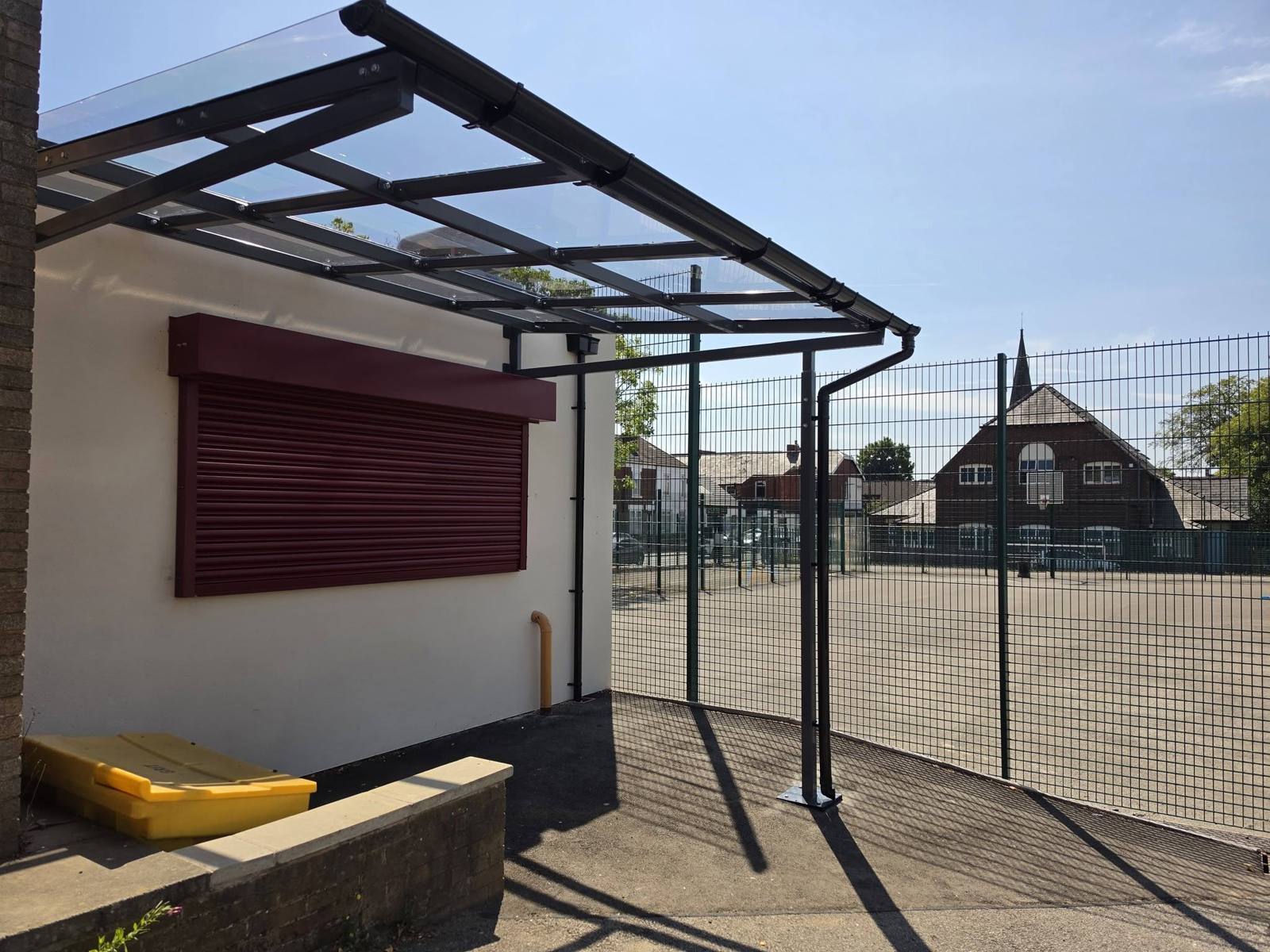
A school canopy is a permanent, engineered roofed structure that covers a playground, dining area, walkway, MUGA or outdoor teaching space so it can be used in any weather. It is fixed to foundations, built from a powder-coated steel frame and a UV-filtering roof, and designed to last for decades.
We design, manufacture and install every school canopy in the UK, from the site survey and CAD drawings through to the finished structure. Because we make the frame and roof ourselves and fit them with our own teams, one company carries the project from a scaled proposal to a signed-off canopy in your school colours.
What types of school canopy do we install?
Canopies & Shelters supplies and installs the following school canopy types: playground canopies, covered MUGAs, outdoor classrooms, early-years canopies, shade sails and covered walkways linking blocks across a site. Each is sized to the space and the age group it serves, from a low-level nursery canopy to a full covered games area.
A playground canopy or outdoor classroom generally takes a solid polycarbonate roof for all-year cover, a covered MUGA keeps its sides open for airflow and light over the court, and a shade sail is a fabric structure for summer sun rather than winter rain. We help you choose the right type for the space and the season it needs to work in. If a games area is on your list, our guide to MUGAs covers sizes, surfaces and covering one.
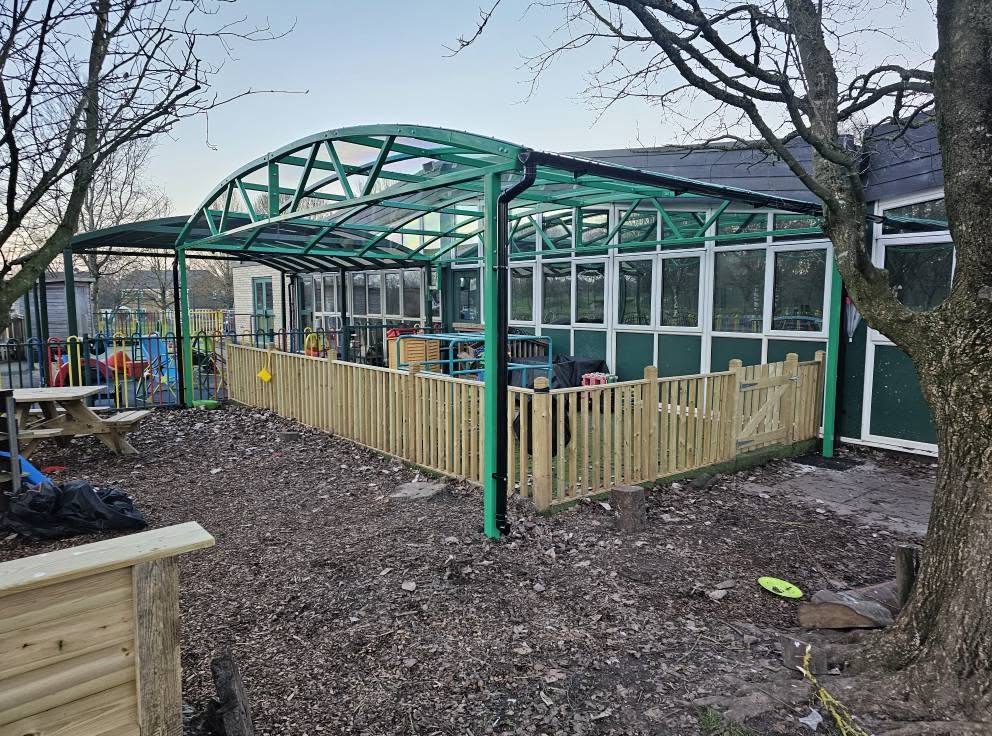
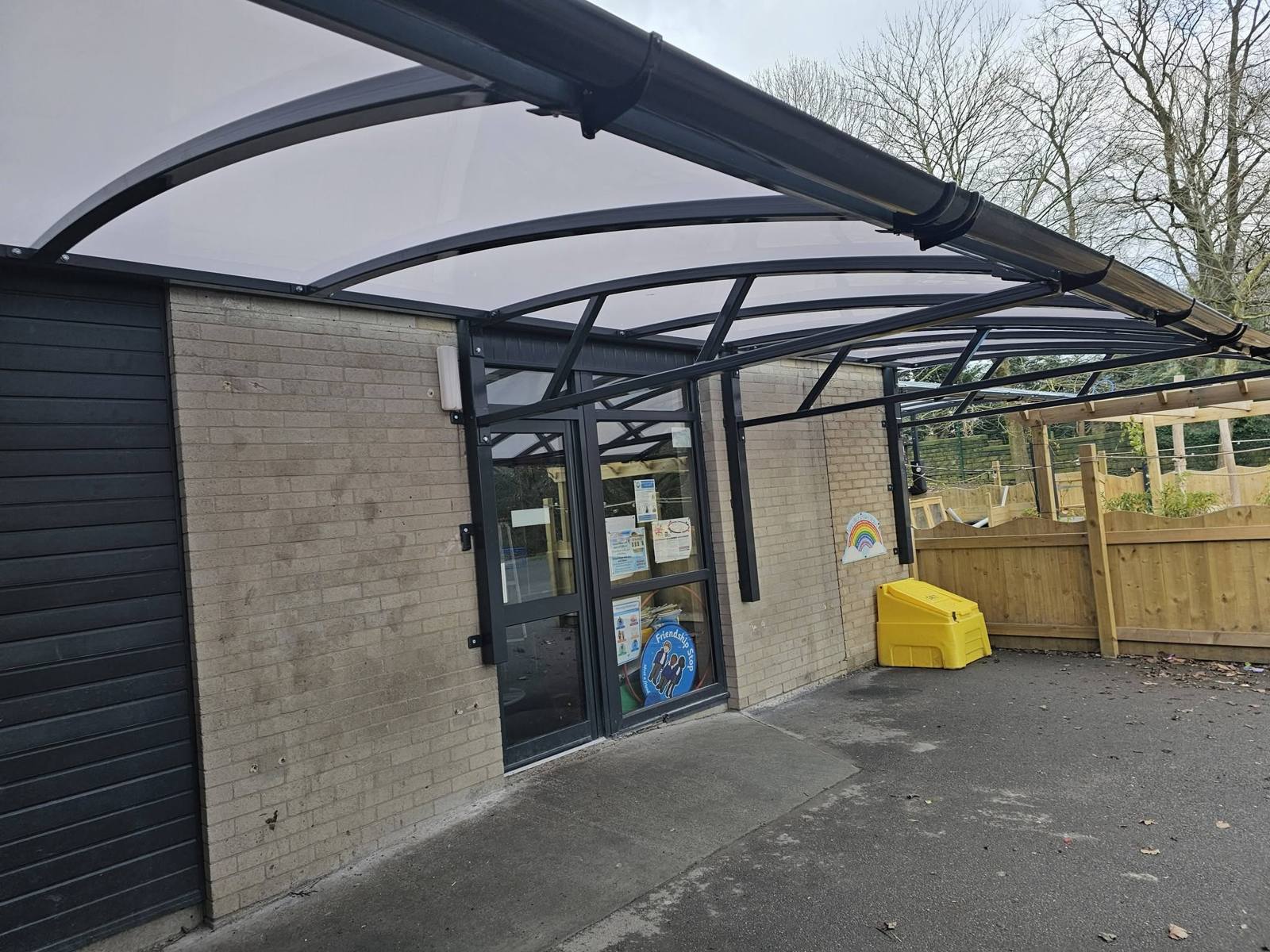
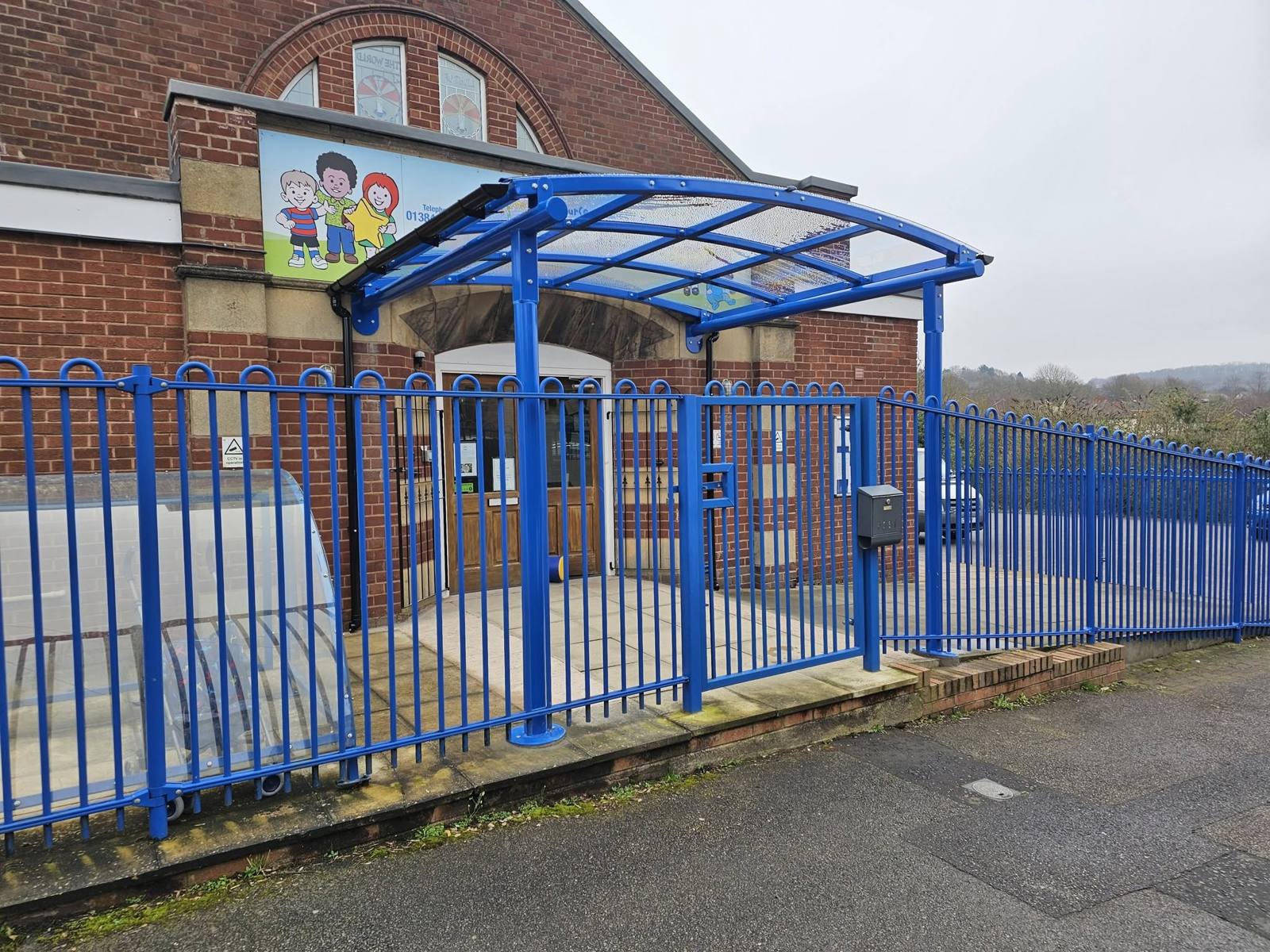
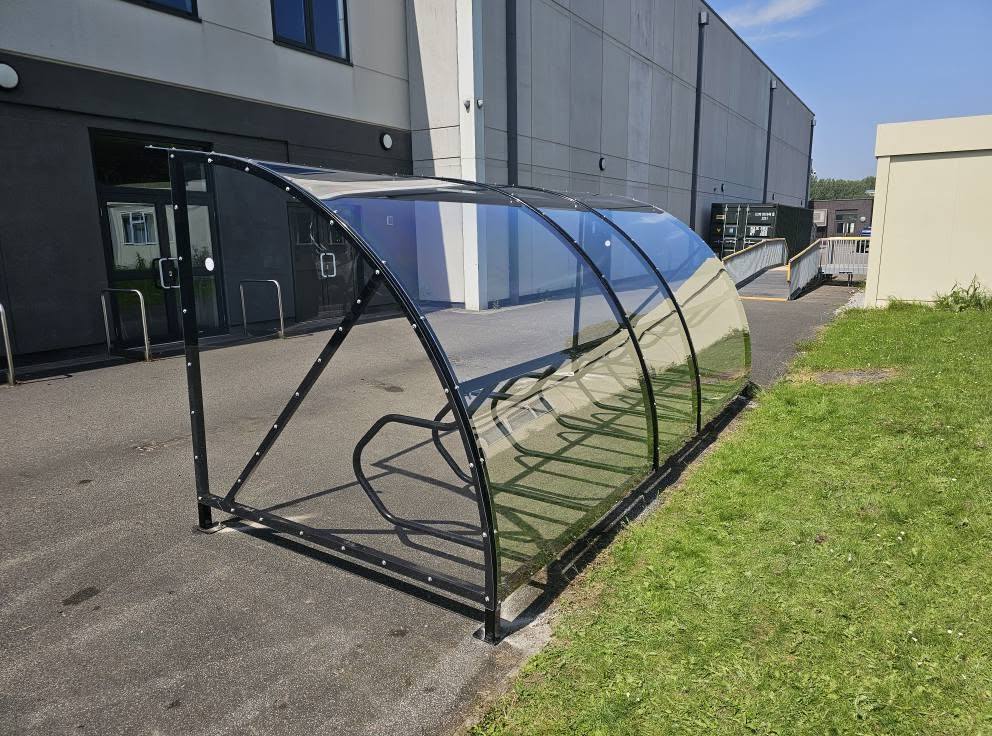
Choosing a shape? Compare canopy forms and roof profiles.
Storing prams, buggies and scooters? Scooter and buggy shelters.
Canopy forms and roof profiles compared
| Form | How it is built | Drainage | Access below | Best suited to |
|---|---|---|---|---|
| Mono-pitch | A single-slope roof on a steel frame | Falls to one side | Sits close to a wall or along a route | Walls, walkways and long building elevations |
| Curved (barrel-vault) | A curved roof on curved steel rafters | Sheds water off the curve to the eaves | More projection and headroom | Entrances, social spaces, cycle and buggy shelters |
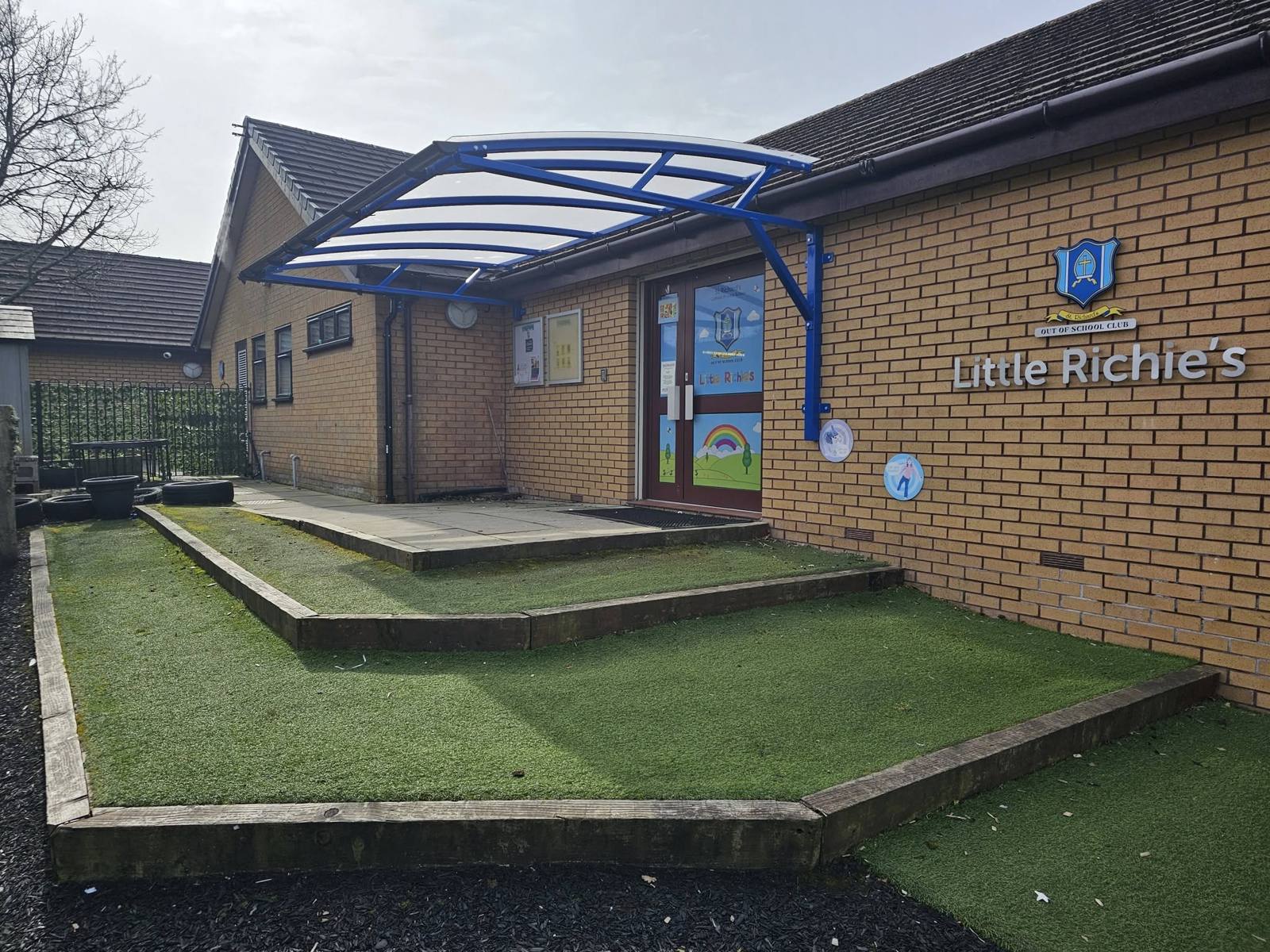
| Cantilever | Roof carried from one line of columns or a wall fixing | Set by the roof profile | No front posts, so the space below stays clear | Entrances, drop-offs and play areas where columns would block access |
| Freestanding | Stands on its own posts and footings | Set by the roof profile | Posts on both sides; can stand anywhere on the site | Open ground, courts and routes away from buildings |
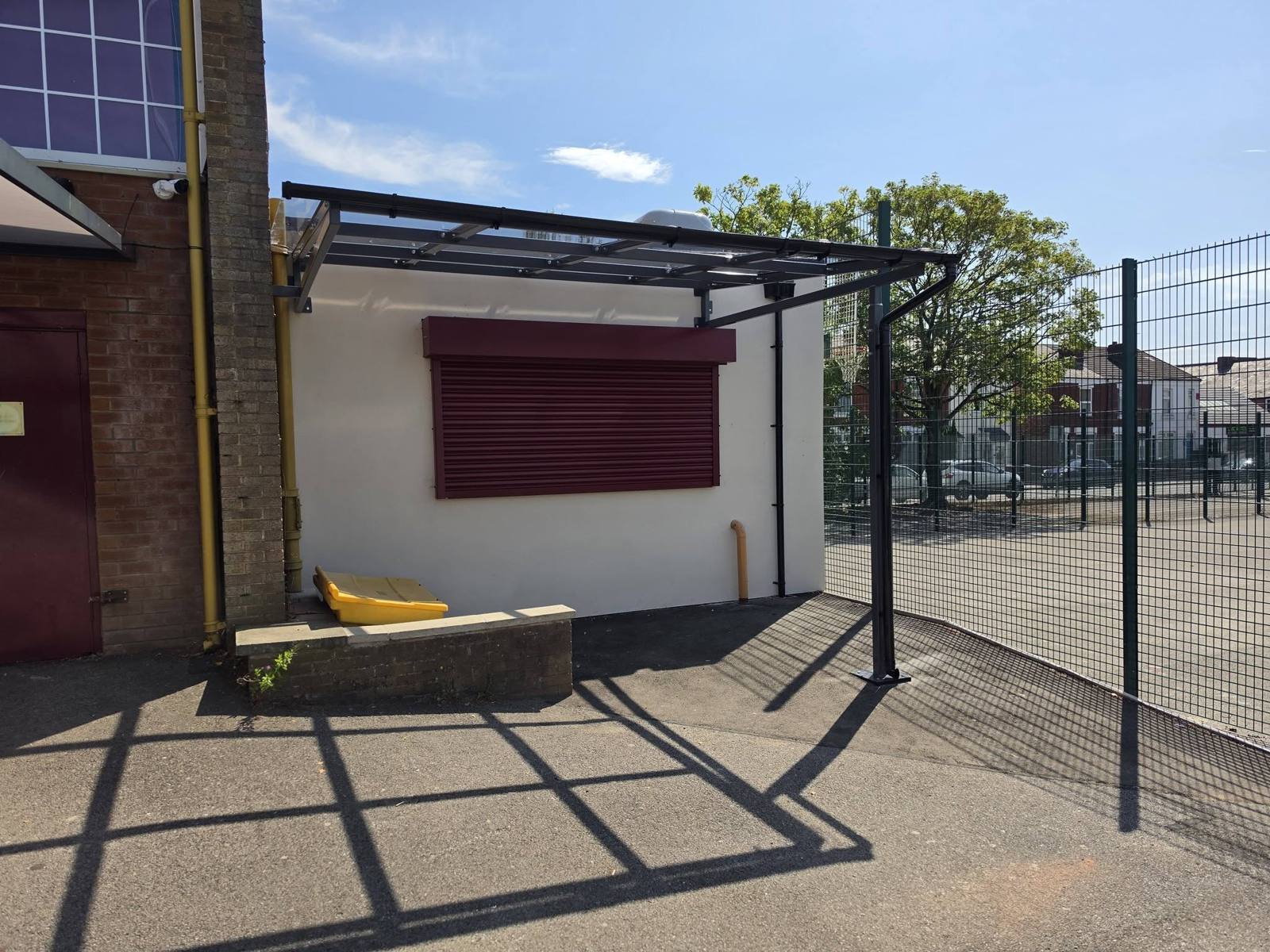
| Wall-mounted (lean-to) | One edge fixes to an existing wall | Falls away from the wall | Fewer posts, as the wall carries one edge | Play areas and nursery gardens beside a building |
Forms combine: a canopy can be a wall-mounted mono-pitch or a cantilevered curved roof. We set the profile, the drainage fall and the fixing at survey.
Which school canopy is best?
The best school canopy is the one matched to the space, the age group and the season it needs to cover, so a decision usually comes down to four things: whether the priority is all-weather cover or summer shade, the size and shape of the area, the age group using it and any groundworks the site allows.
For a playground or dining area used year-round, a solid steel-framed canopy with a polycarbonate roof is usually right; for a court where airflow matters, a covered MUGA keeps its sides open; for a nursery garden, a low-level early-years canopy scaled to small children fits best; for summer sun over a seating or dining space, a shade sail may be all that is needed.
What are school canopies made of?
Our school canopies are made of a powder-coated steel frame in your school colours or any RAL shade, carrying impact-resistant polycarbonate roof sheets that filter around 99% of UV; a covered MUGA can take a roof membrane, and a shade sail is a tensioned fabric.
Frame
Powder-coated steel with no sharp edges, finished in school colours and engineered for wind and snow loading to BS EN 1991.
Roof
Impact-resistant polycarbonate, clear, opal or tinted, for all-year cover; a roof membrane over a larger MUGA span; tensioned fabric for a summer shade sail.
Profile
Mono-pitch, curved or cantilever, wall-mounted as a lean-to against a school building or free-standing on its own posts.
Fixing
Engineered foundations sized to the site's loading; where a sound slab or wall already exists we fix to it and reduce the groundworks.
Roof materials compared
| Roof material | Daylight and UV | Weather cover | Span | Typical life |
|---|---|---|---|---|
| Polycarbonate sheet, 5mm or 8mm | Clear, opal or tinted; filters around 99% of UV | Water-resistant, sealed with a double rubber bead | Carried bay by bay on the steel frame | 20 to 30 years |
| PVC-coated polyester fabric | Translucent; gives shade and keeps the area bright | Weatherproof, tensioned to shed rain | Longer clear spans with few supports | 15 to 25 years |
| PTFE-coated glass fabric | Translucent, with a self-cleaning surface | Weatherproof, tensioned to shed rain | Larger or higher-profile spans | 25 to 35 years or more |
Typical lives are the figures given on our product pages. The steel frame usually outlasts the roof, and roof sheets or a membrane can be replaced without rebuilding it. We confirm the roof specification at survey.
How much does a school canopy cost?
A school canopy costs from around £1,500 for a single shade sail to £60,000 or more for a large covered MUGA, and the figure for any one project is set by what it covers: the clear span, the roof, and whether the frame fixes to a wall or stands on new foundations. These are indicative UK ranges to confirm at a site survey, not fixed prices.
Schools generally fund a canopy from one of a few routes: a capital budget or a devolved formula capital allocation, a revenue budget for smaller works, the Department for Education's Condition Improvement Fund for academies and sixth-form colleges, or a procurement framework used by a local authority or multi-academy trust. We provide the CAD drawings, a specification and a written quotation that fit whichever funding route your school is using, and we quote every project after a survey. For a fuller breakdown, see our guides to school canopy costs and funding a school canopy.
| School canopy type | Indicative installed cost | Main cost drivers |
|---|---|---|
| Playground canopy | £8,000 to £30,000 | wall-mounted or free-standing, clear span, groundworks |
| Covered MUGA | £20,000 to £60,000+ | court size, span, frame and roof spec |
| Outdoor classroom | from £8,000 to £30,000+ | reading corner or full class, level of enclosure |
| Early-years canopy | from £3,000 to £30,000 | wall-mounted or free-standing, garden area |
| School dining canopy | £8,000 to £30,000 | seating capacity, servery route, roof area |
| Shade sail | from £1,500 to £8,000 | number of sails, area covered, fixing points |
Indicative UK ranges to confirm at survey, installed and excluding any enabling works. Our work is quote-based; we do not sell fixed-price units.
How much does a school dining canopy cost?
A school dining canopy costs around £8,000 to £30,000 installed, with a small servery-scale cover from around £3,000. These are indicative ranges to confirm at survey, because the figure moves with the number of pupils seated at each sitting, the route from the servery hatch or kitchen door, the roof area and the groundworks.
A dining canopy links the servery to an outdoor eating area, easing pressure on the hall at lunchtime and giving pupils a sheltered place to eat between lessons. We size it around the servery route and the seating count, and our dining canopies page covers glazed sides, heating and lighting in more detail.
Do school canopies need planning permission?
A school canopy often needs planning permission and building-regulations approval, because school premises do not carry the domestic permitted-development rights that apply to a house. Whether a full application is needed depends on the size of the structure, the site and whether it changes an elevation.
Larger canopies, listed buildings, conservation areas and academy sites with their own planning conditions usually need an application, and most permanent structures also need building-regulations sign-off for structural loading. We supply the CAD drawings, structural load calculations and specification your local authority, MAT estates team or building-control officer needs, and we can advise early on what your project is likely to require. Our guide to planning permission for canopies sets out when an application is needed.
Are your school canopies safe for children?
A school canopy is designed for children first: the frame is powder-coated steel with no sharp edges, the roof is impact-resistant polycarbonate, and the whole structure is fixed to engineered foundations sized to the site's wind and snow loading. Safety is built in at the design stage.
For early-years and nursery settings we scale the canopy to a lower, age-appropriate height and keep fixings and edges considered throughout; for primary and secondary sites the design follows the same principles at a larger scale. Every canopy can be finished in your school colours or any RAL shade, and the design is checked before it goes ahead so the finished structure is safe and secure for the age group using it.
How are school canopies installed?
Canopies & Shelters installs school canopies with our own teams in four stages: a site survey, a CAD design and specification for sign-off, UK manufacture of the frame and roof, then groundworks and the on-site build, each covered by a method statement agreed with the school beforehand.
We plan every installation around the school calendar, working in holidays or phasing the job during term time where holiday working is not possible, to keep disruption to lessons and staff at a minimum. Most canopies fix to new foundations, though where a sound slab or wall already exists we can fix to it and reduce groundworks. Send us a site plan or drawings and our design team returns a scaled proposal.
What are the benefits of a school canopy?
A school canopy turns unused outdoor space into everyday teaching, play and social space: it keeps a playground usable in rain and sun, gives a dining area all-weather cover at lunchtime, lets a MUGA be played on regardless of the forecast, and gives early years and SEND pupils a sheltered space to move between indoors and out.
Because the structure is permanent and low-maintenance, it adds a lasting asset to the site, and it can be finished in school colours so it fits the look of your grounds. See our school canopy projects for the playground, early years and entrance canopies we have completed.
How do school canopies support outdoor learning?
A school canopy extends teaching, play and dining space outdoors by removing the weather as the reason a lesson or activity has to move inside, so an outdoor classroom or covered playground can be used across the year. That matters through the EYFS free-flow stage, the wider primary and secondary curriculum, and for pupils with SEND who benefit from a calmer, covered outdoor space.
Ofsted takes account of a school's provision for outdoor learning, and a well-used, well-maintained covered space is one of the things that can support that provision, though a canopy is one part of a wider outdoor-learning approach rather than a guarantee of any inspection outcome. A canopy is what makes that outdoor time dependable. Our guide to outdoor learning and the EYFS explains what the framework expects of daily outdoor provision.
Recent school canopy installations
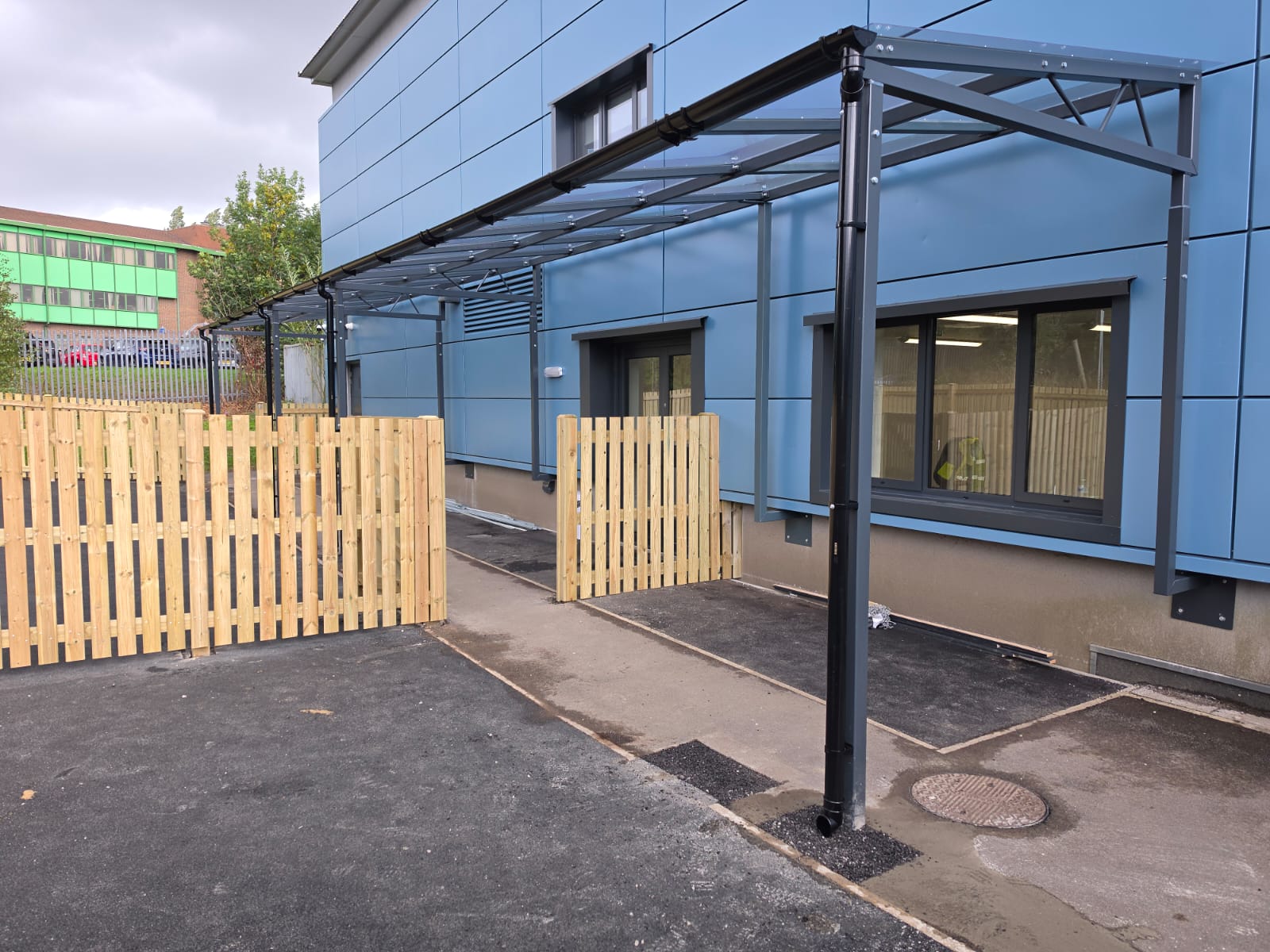
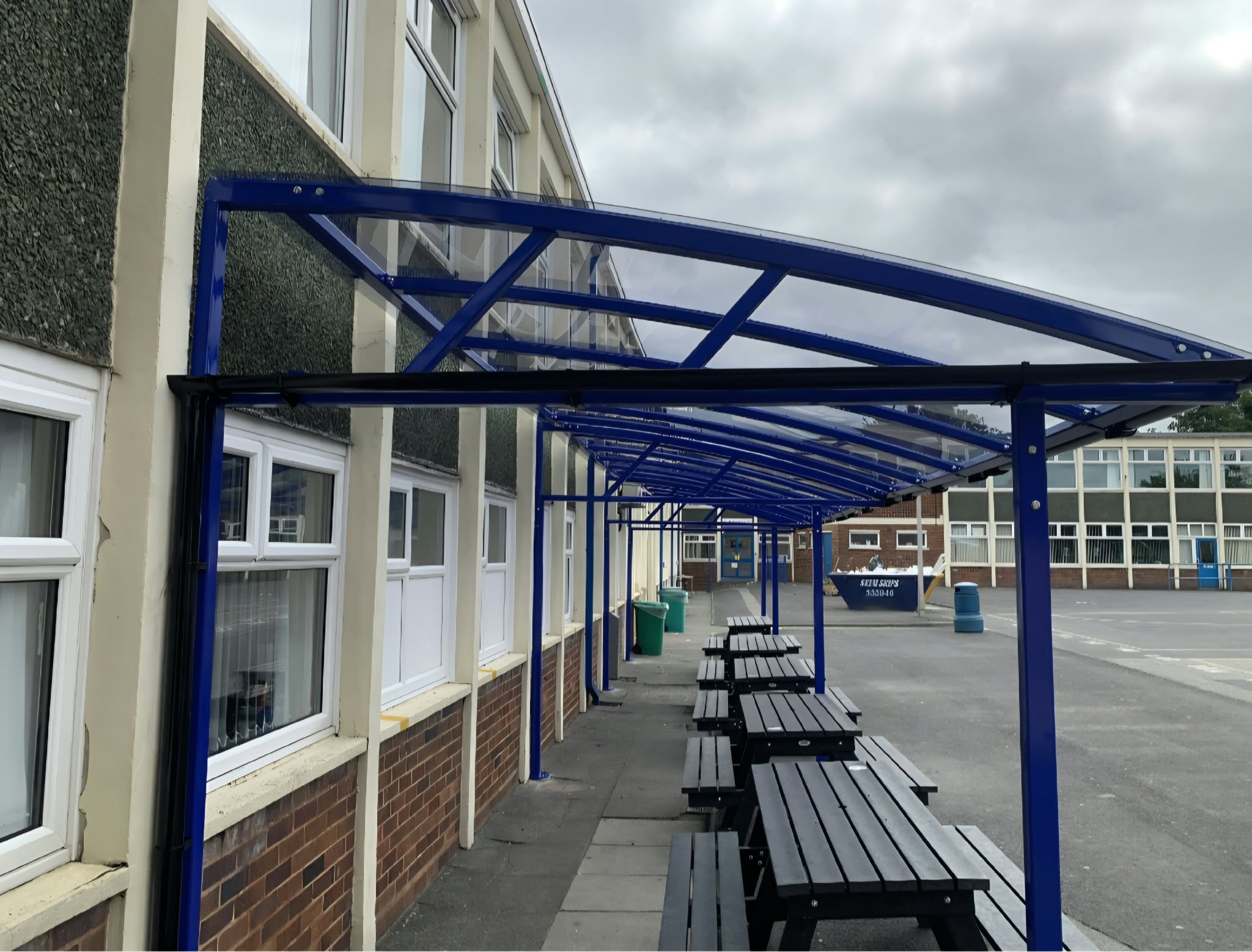
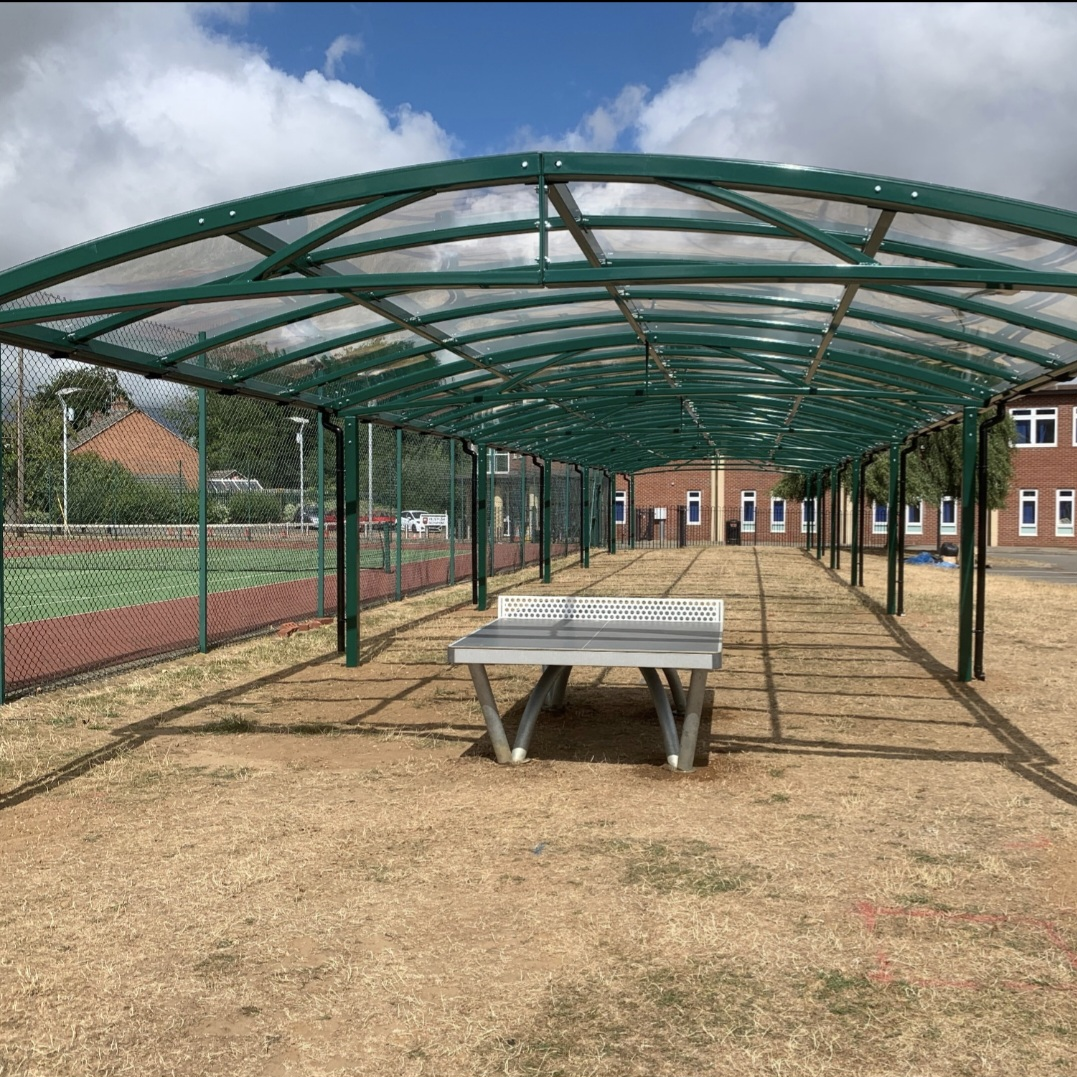
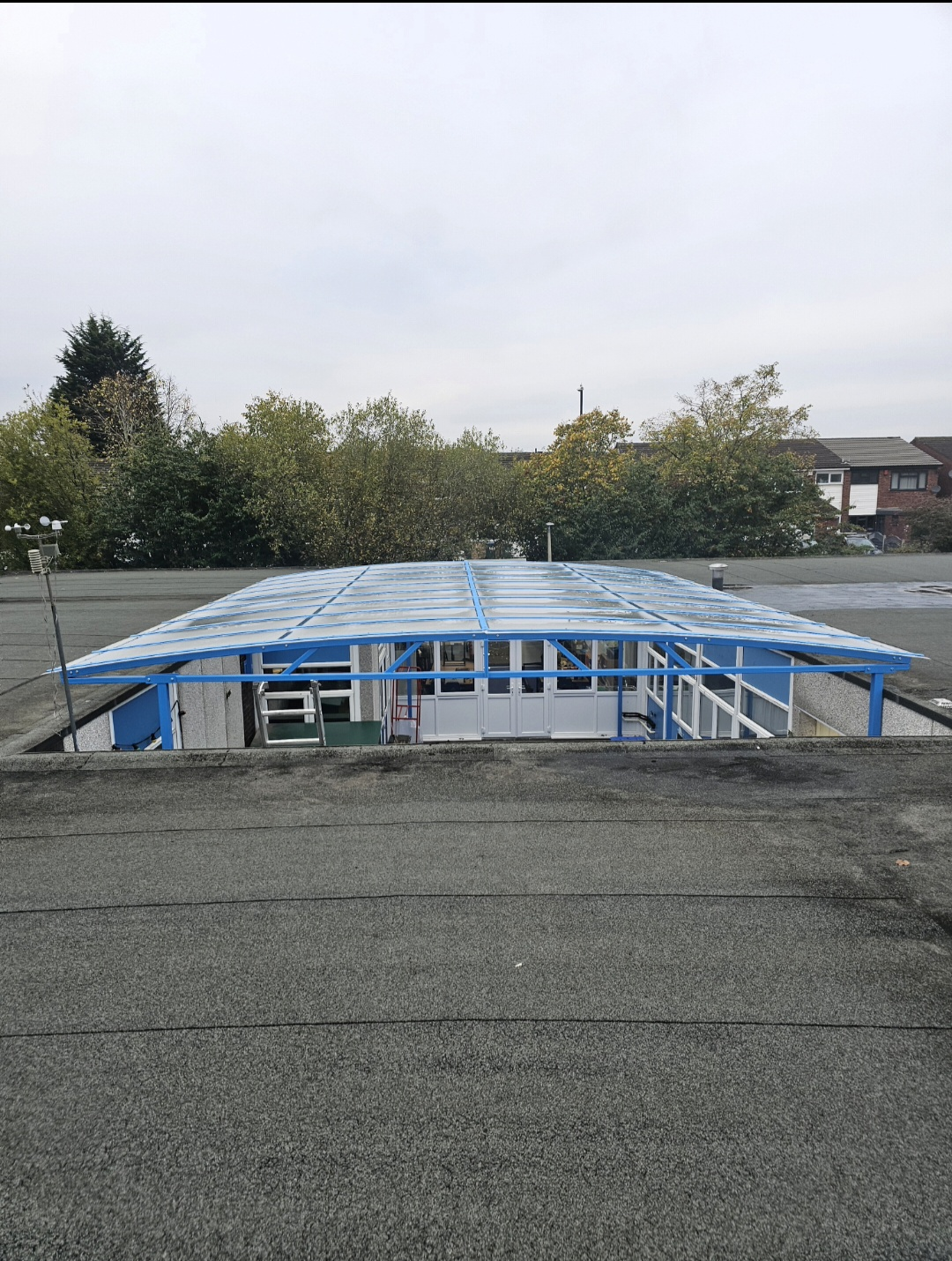
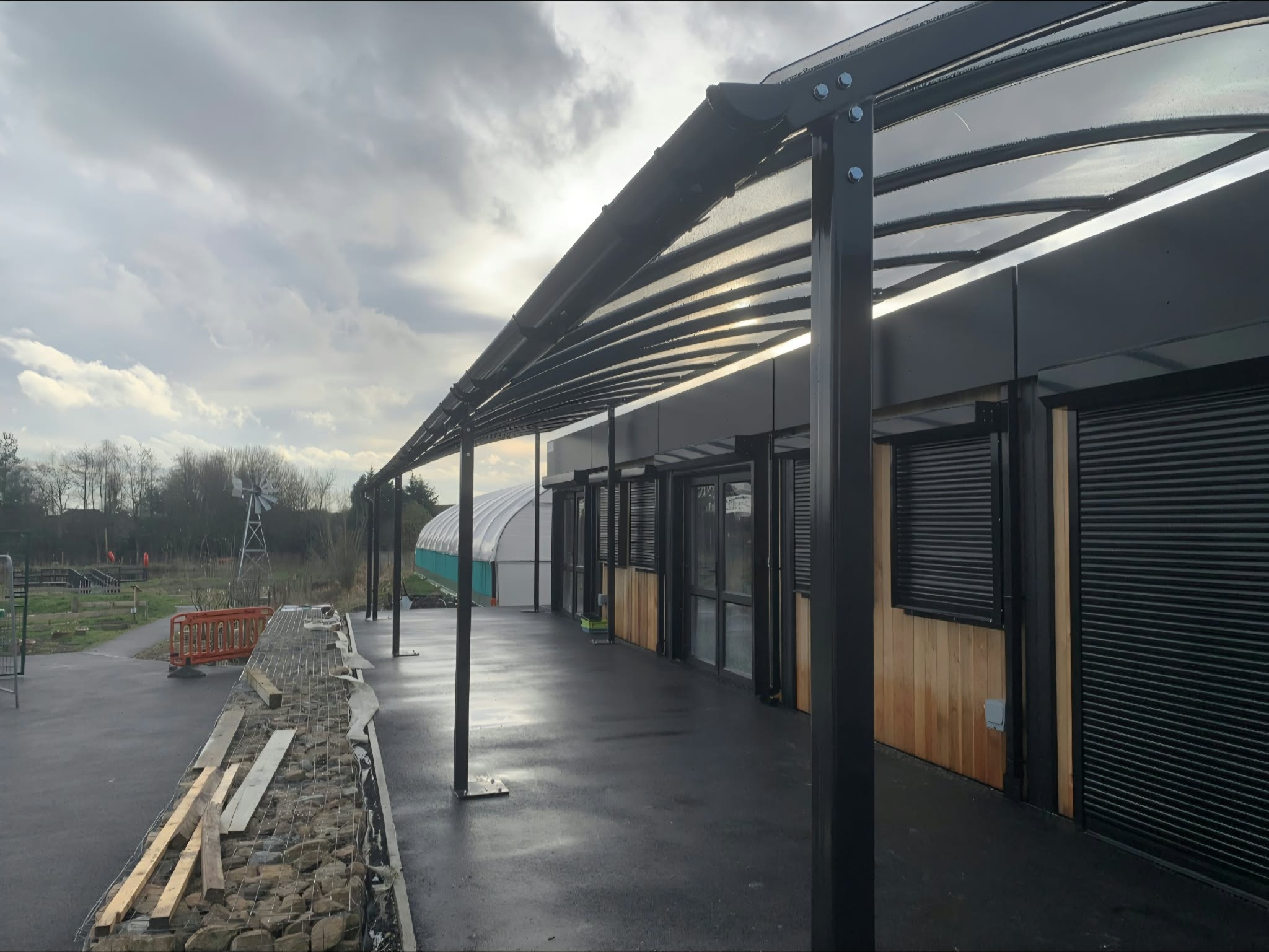
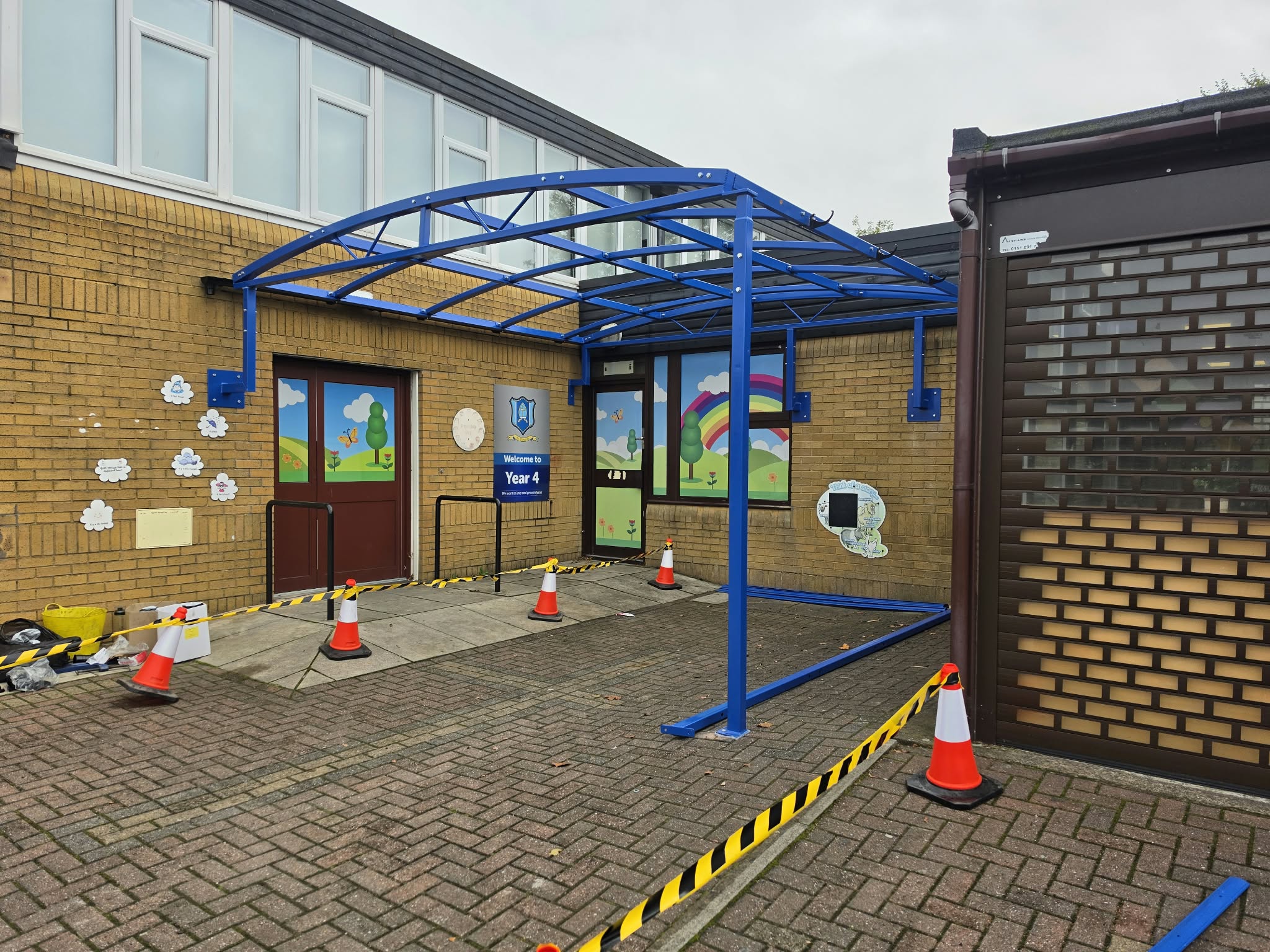
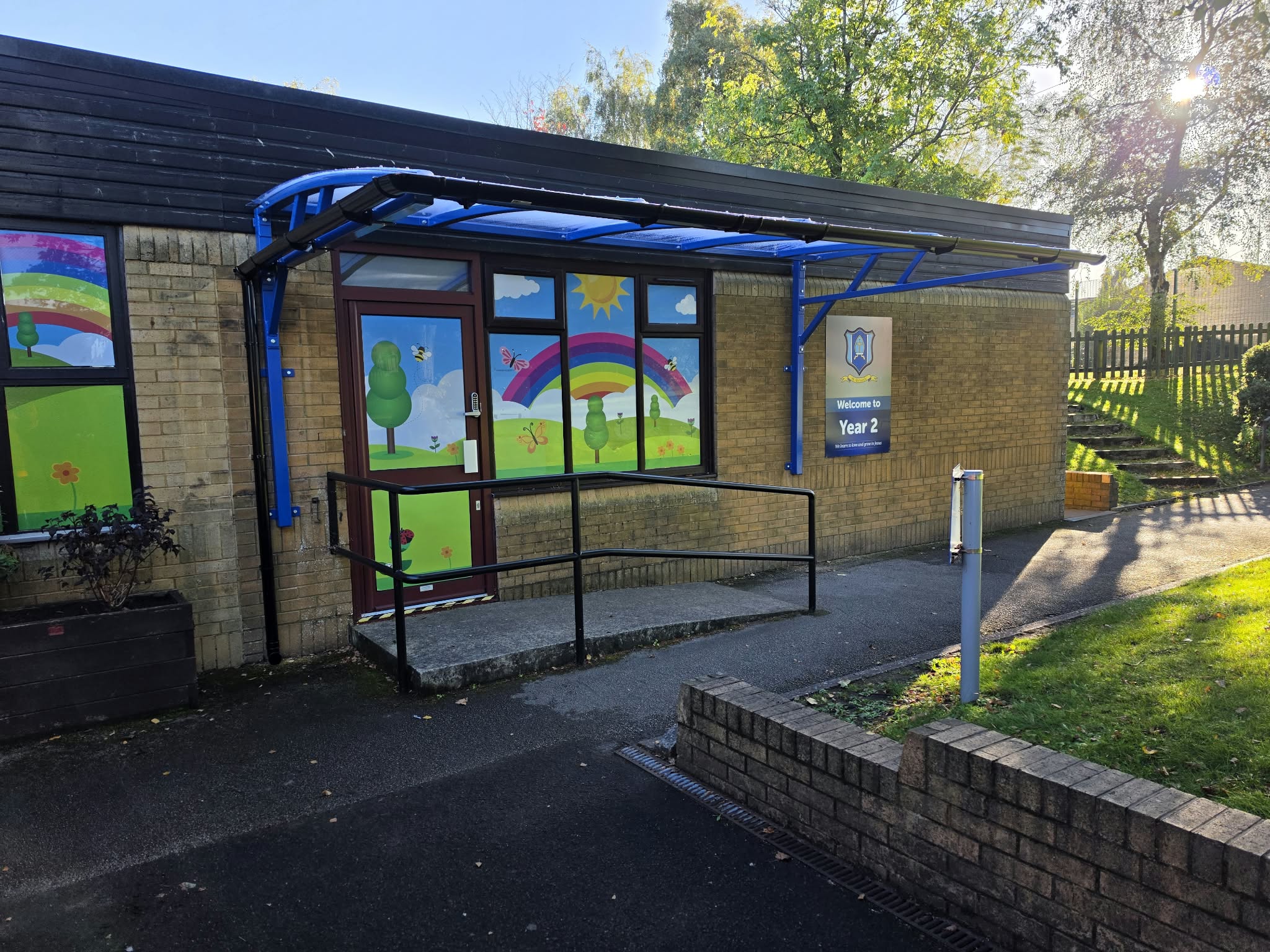
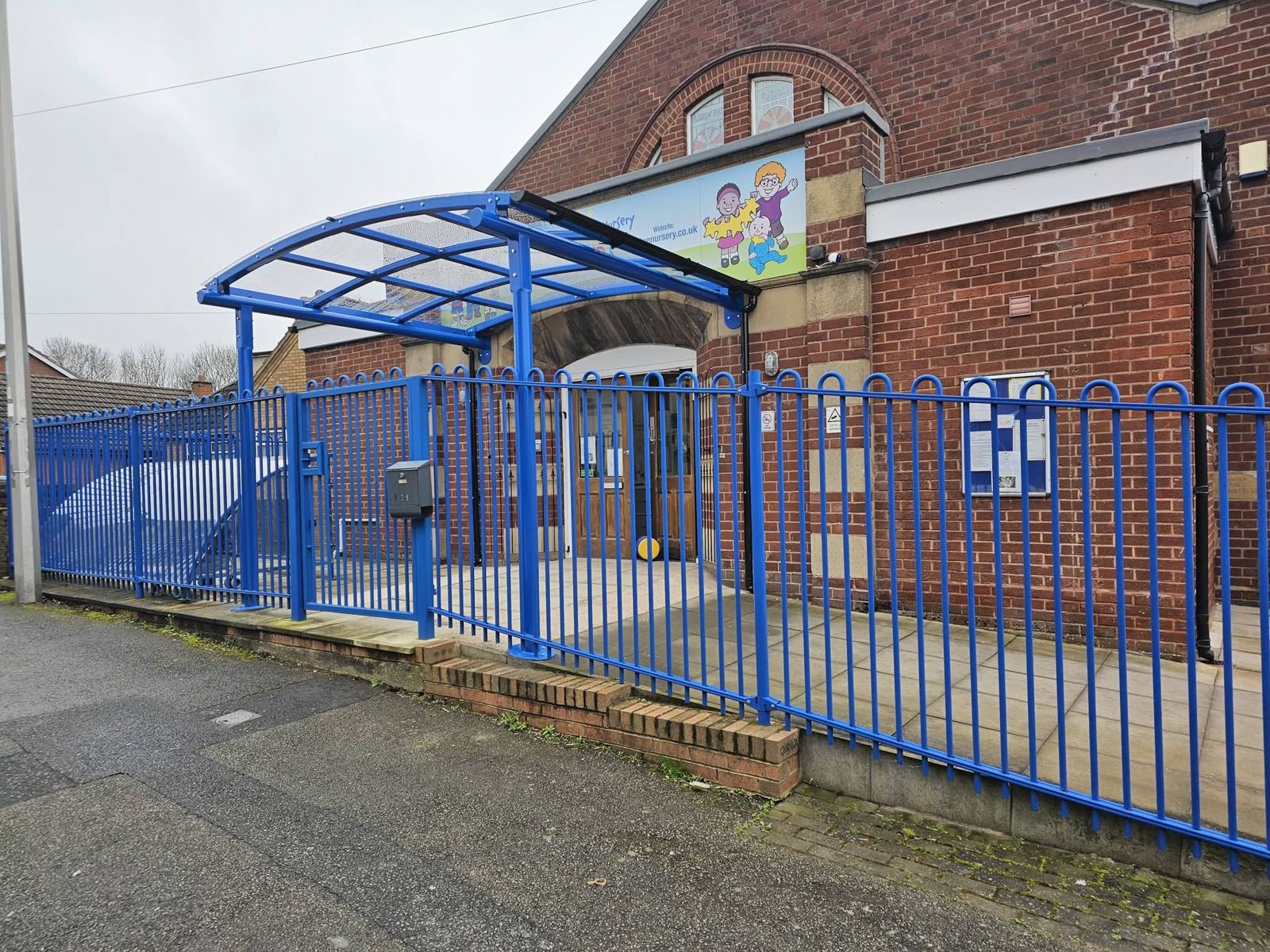
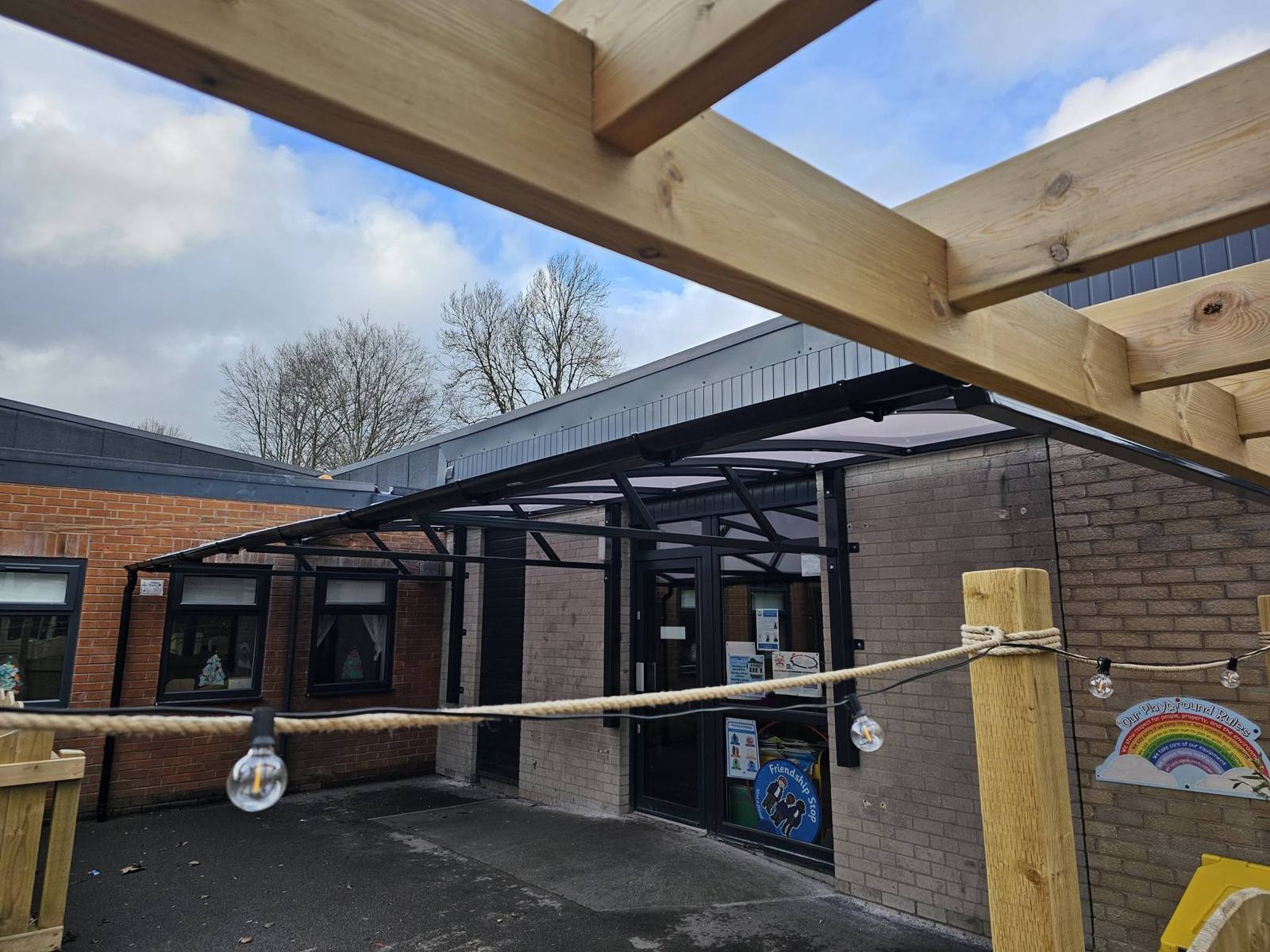
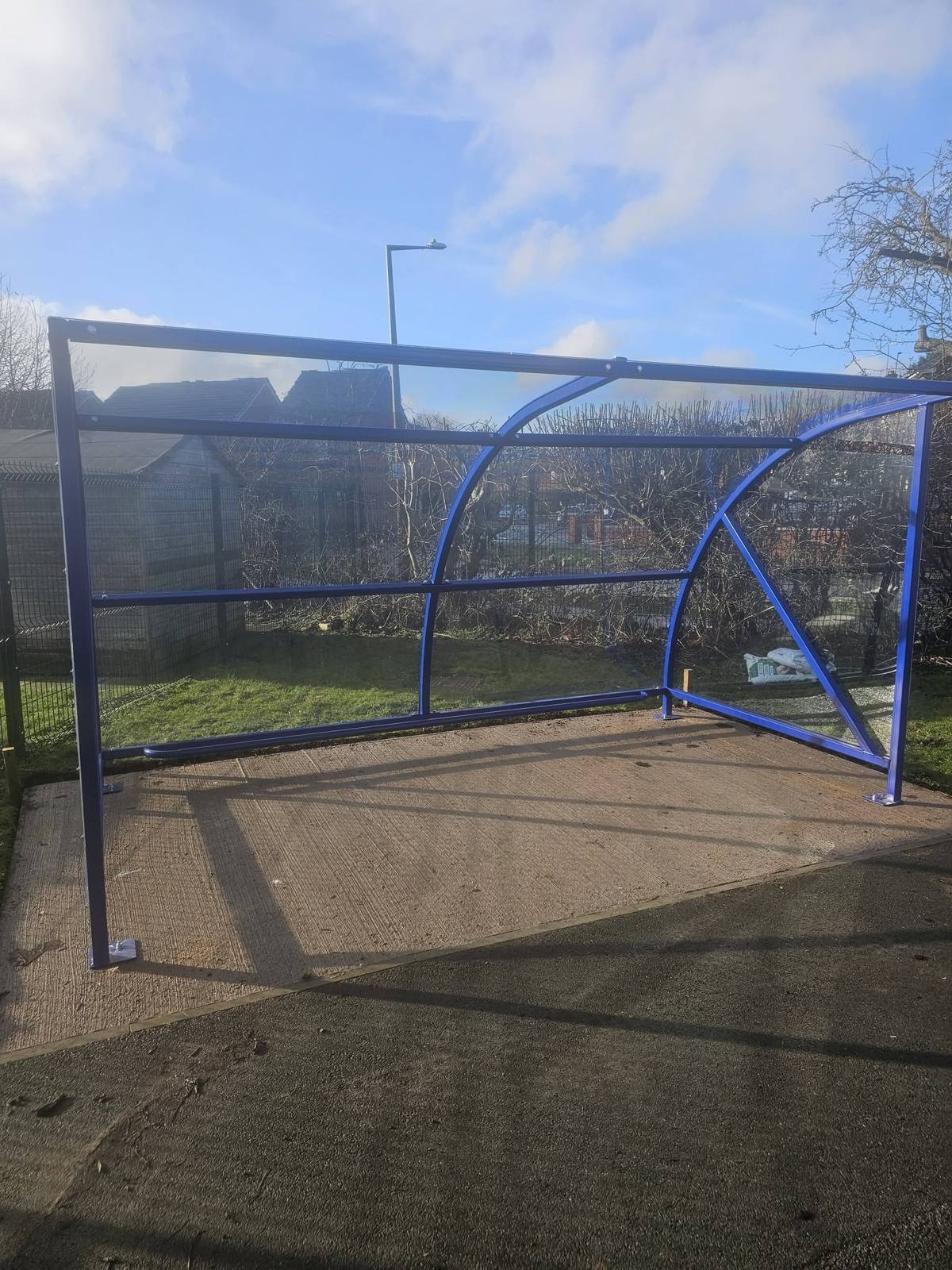
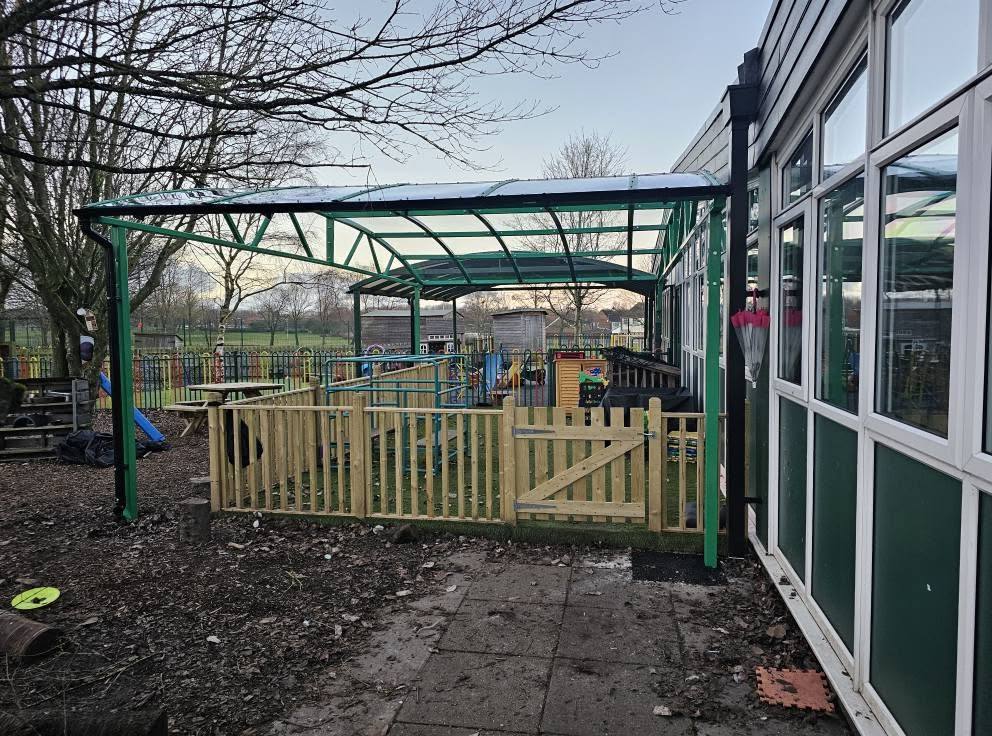
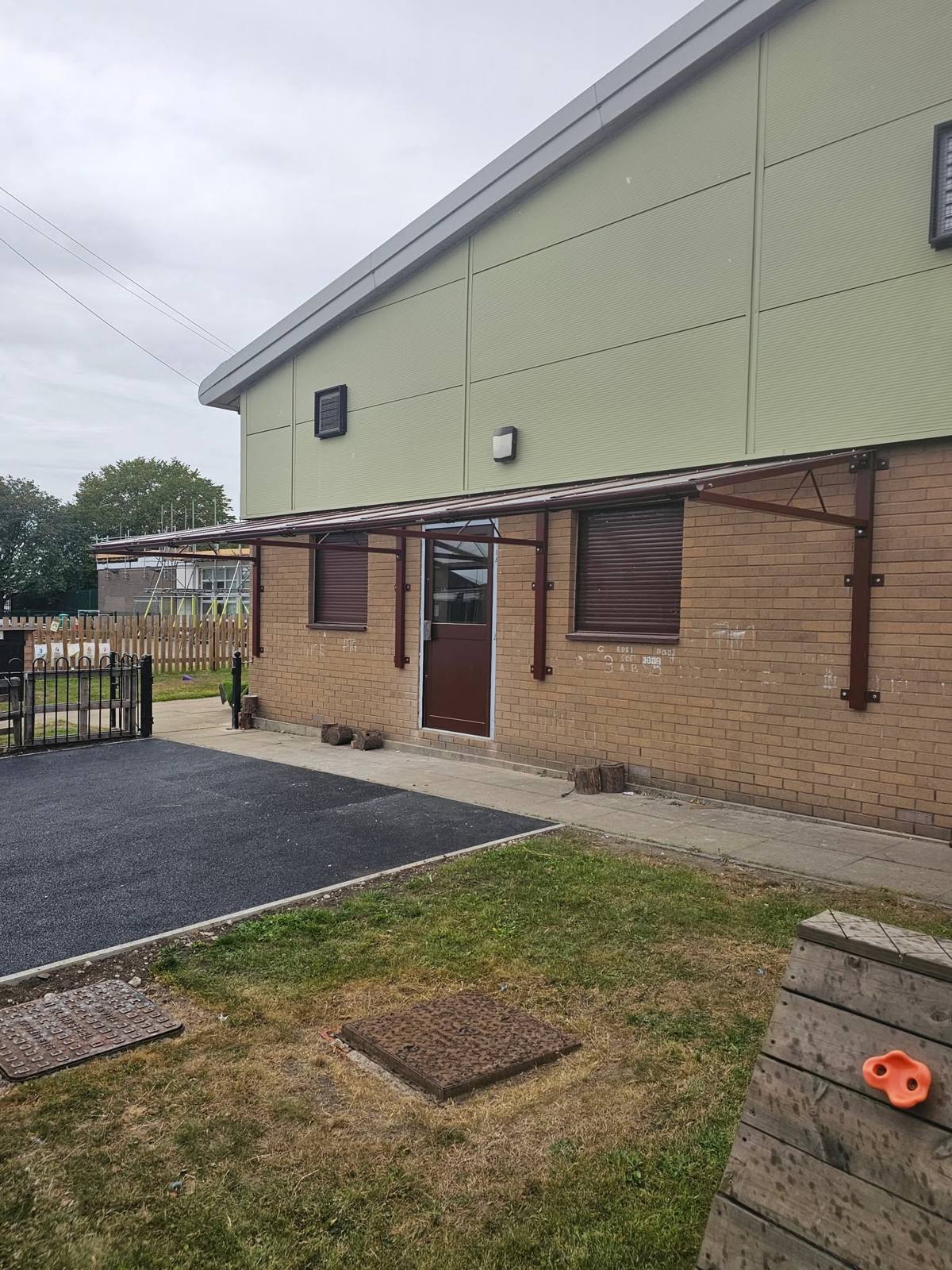
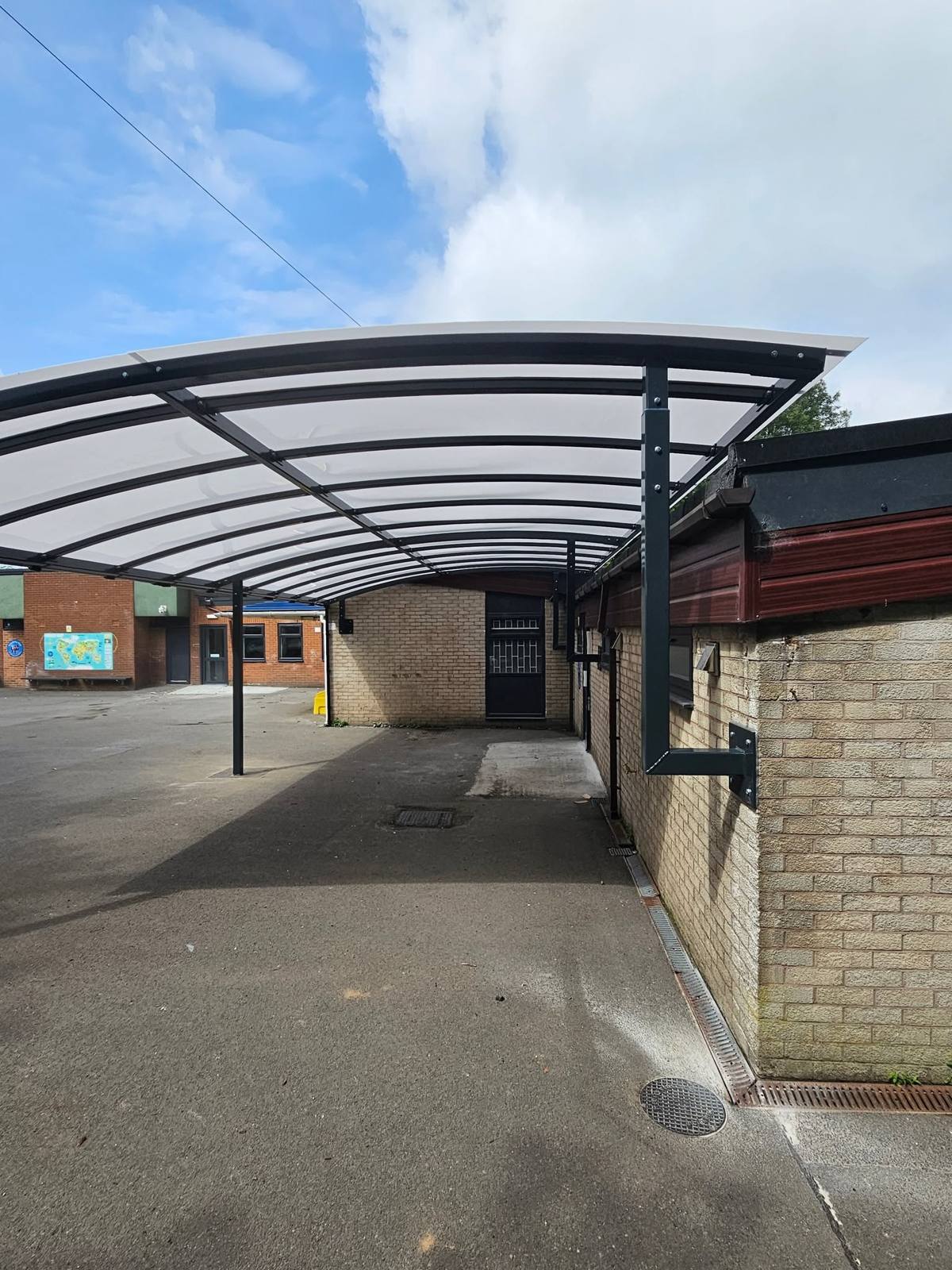
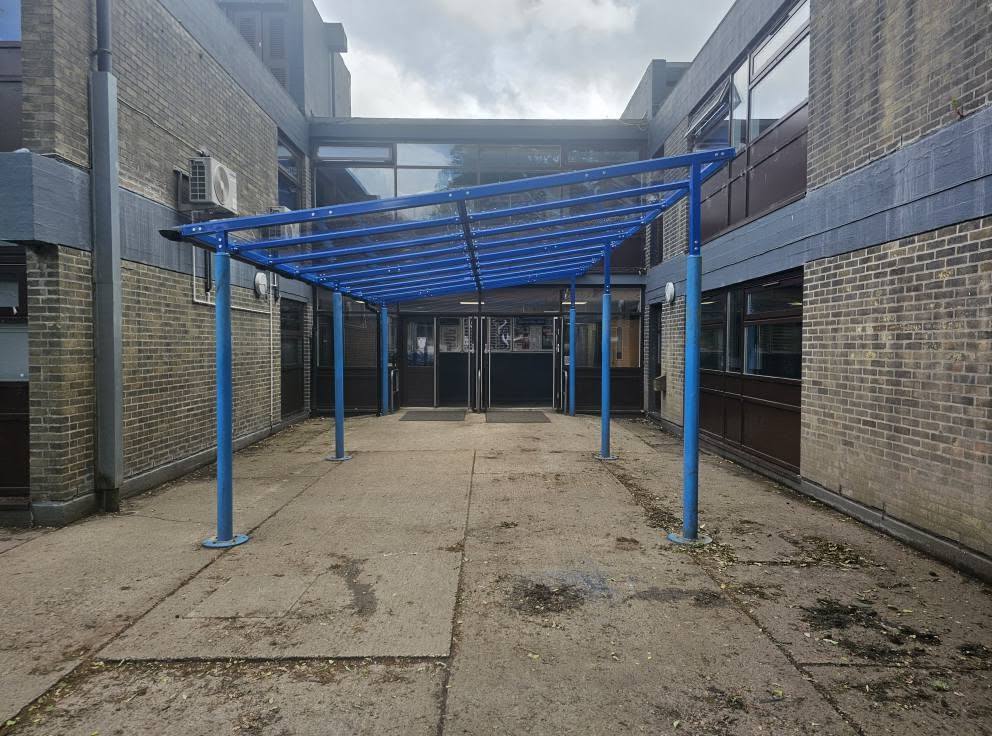
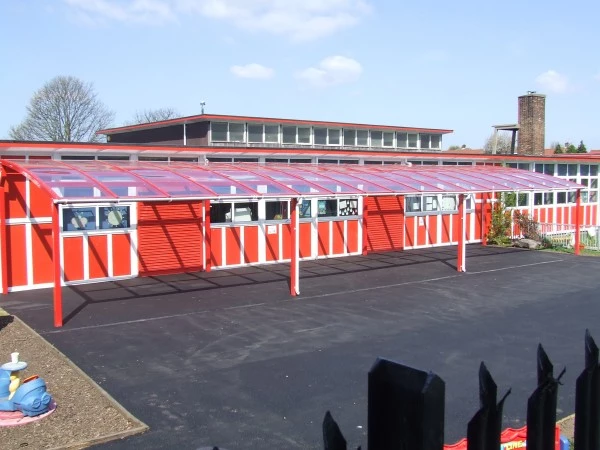
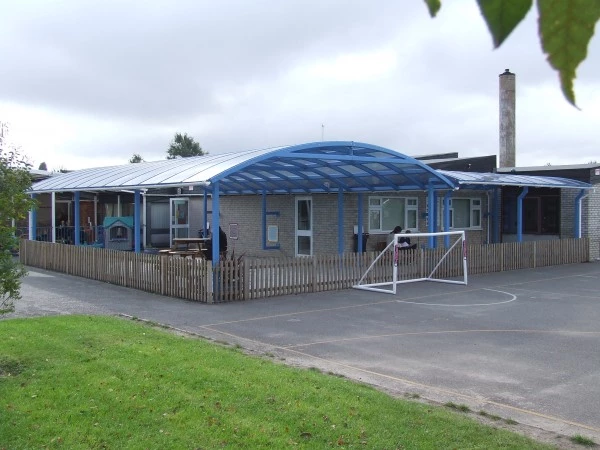
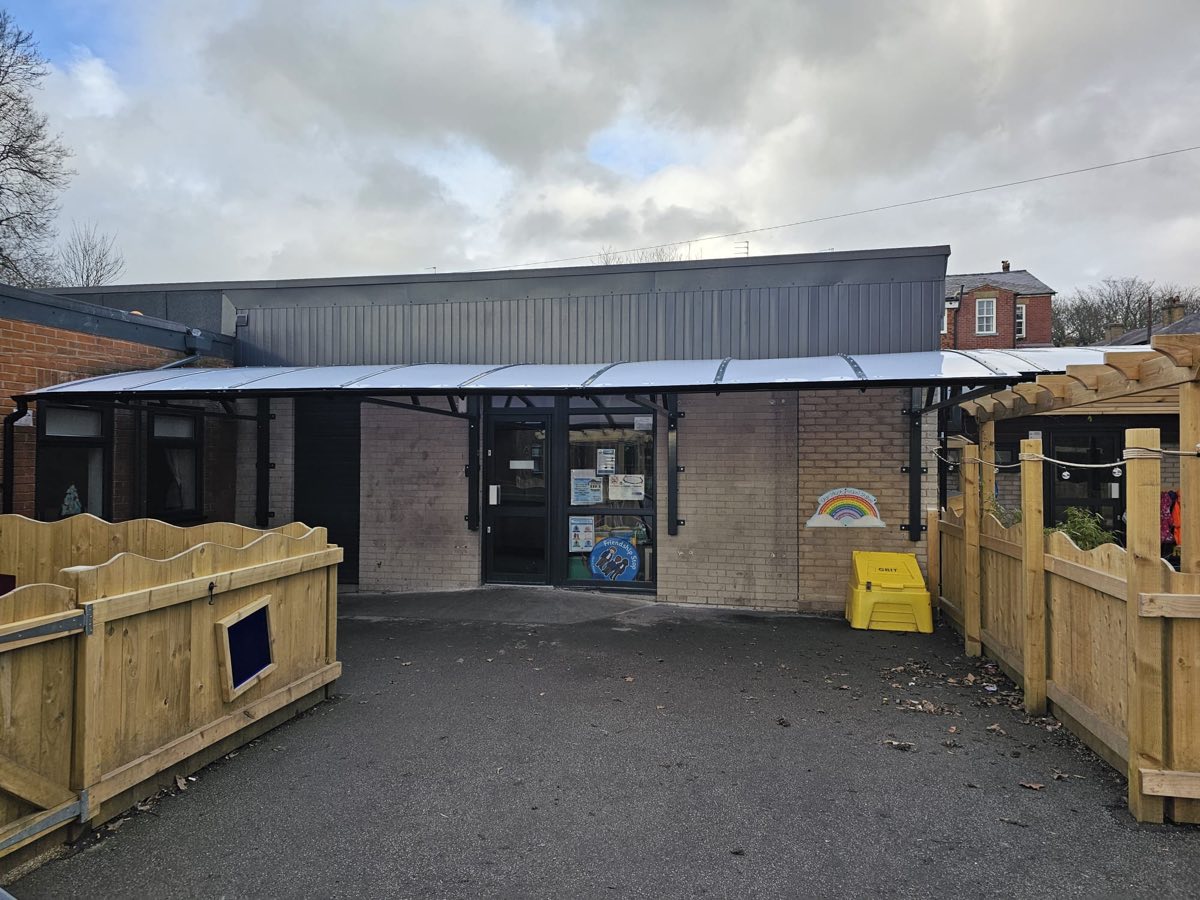
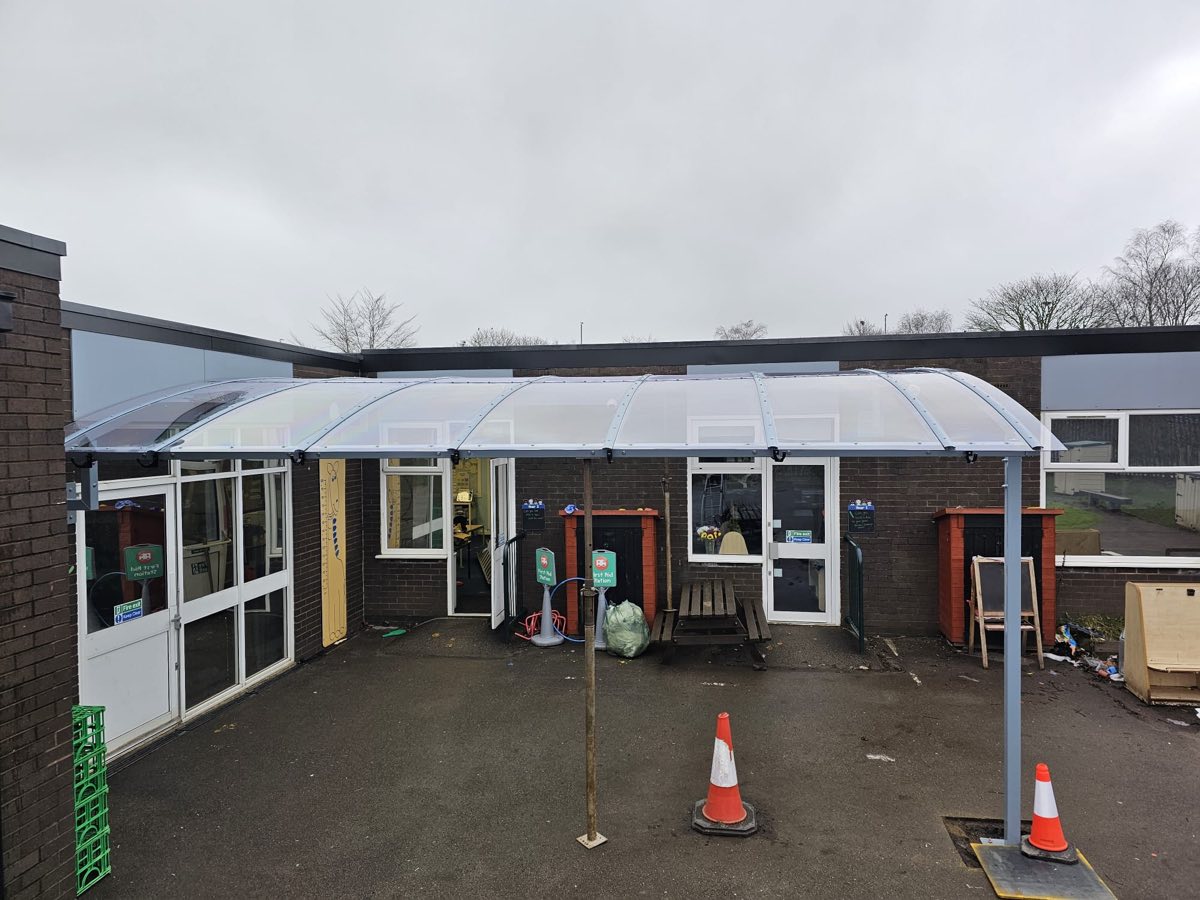
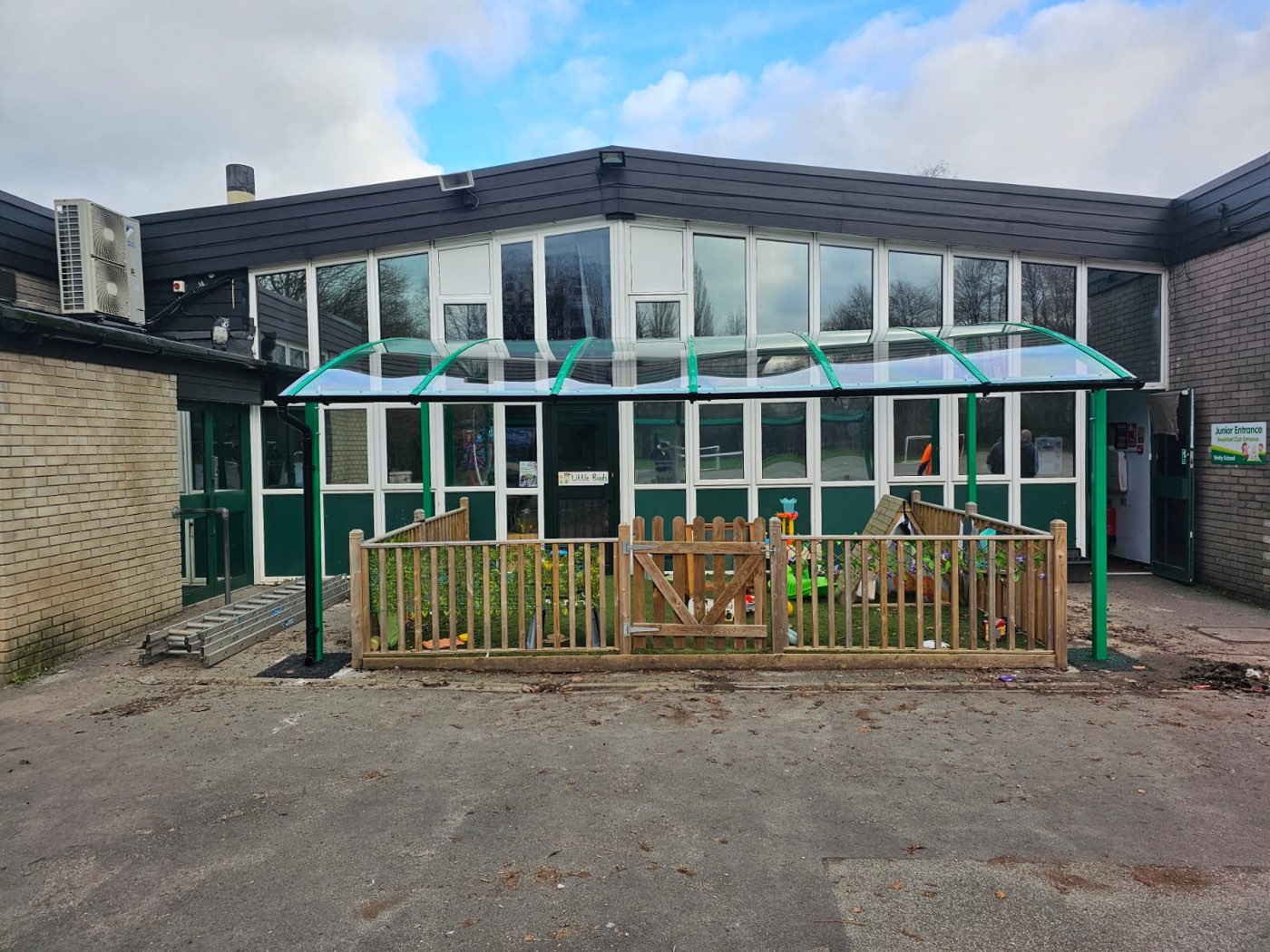
Real canopies we have designed and installed for schools, photographed on completion.
Why choose Canopies & Shelters for school canopies?
Canopies & Shelters can cover a whole school site from one survey: a playground canopy, a covered MUGA, an early-years canopy and a walkway between blocks designed together, finished in the same school colours and programmed around the same holiday dates.
We work with schools, academy trusts and nurseries across England, Scotland and Wales, planning every installation around the school calendar and providing the CAD drawings, structural load calculations and specification a governing body, MAT estates team or procurement process needs. Every canopy is made to measure for the site and delivered by our own labour and manufacture rather than subcontracted out.
School canopy questions
How do schools fund a canopy?
Schools typically use a capital or devolved formula capital budget, a revenue budget for smaller works, the Department for Education's Condition Improvement Fund for eligible academies and colleges, or a procurement framework run by a local authority or multi-academy trust. We provide the drawings and specification to support whichever route your school uses.
Will installation disrupt the school day?
We plan every installation around the school calendar, working in holidays where possible or phasing the job during term time, with a method statement agreed with the school beforehand. Our own fitting teams carry out the work to keep disruption to lessons and staff to a minimum.
Can a school canopy be finished in our school colours?
Yes. The steel frame is powder-coated, so it can be finished in your school colours or any RAL shade at no compromise to the structure, whether it is a playground canopy, an early-years canopy or a covered MUGA.
Where can I buy canopies for schools in the UK?
From us. We are a UK manufacturer and installer, so we design, make and fit every school canopy with our own teams and cover schools, academy trusts and nurseries across England, Scotland and Wales. Send a site plan or a postcode and we return a scaled proposal, drawings and a quotation.
In-house canopy design and manufacture, supply and install, UK-wide.
Get a school canopy quote
Send us the space, playground, MUGA, dining or early-years, and we’ll return a design, a specification and a price, planned around your term dates.